
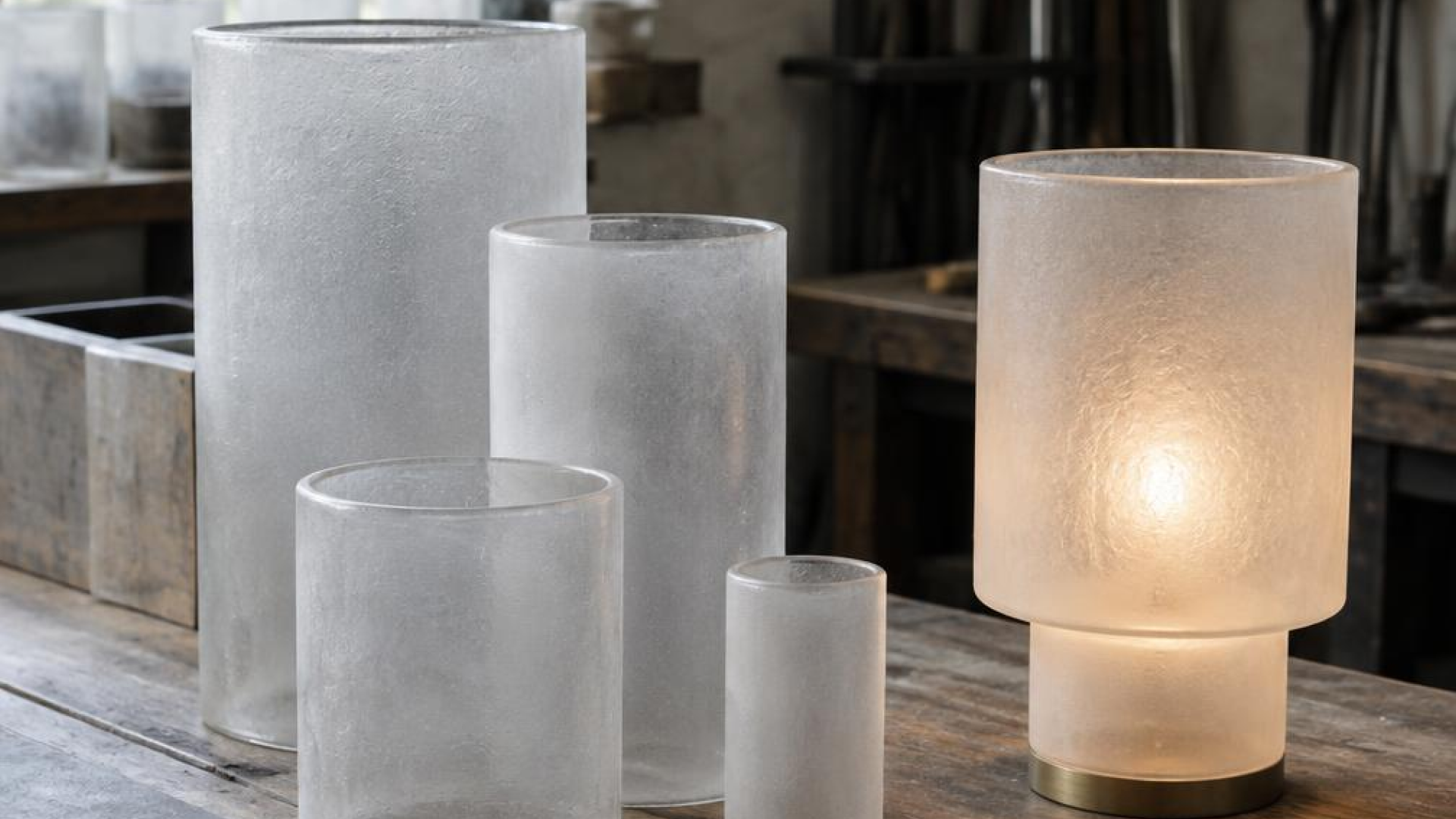
Frosted glass has a peculiar ability to make a light source feel present without making it visible. The bulb disappears; what remains is a volume of quiet luminosity.
In hand-blown forms, slight differences in thickness alter the way light travels through each surface. One edge reads warm, another nearly white. These are not irregularities to conceal but traces of how the material was shaped.
Stacked into a floor lamp, individual glass forms become a rhythm. Each illuminated volume responds to the next, turning a functional object into a vertical study of repetition and variation.
“On the subtle variations that make hand-blown glass a natural material for sculptural light.”